 Emergency Preparedness
  Resources: Emergency Preparedness
Disaster can strike quickly and without warning. It can force you to evacuate your neighborhood or confine you to your home. What would you do if basic services such as water, gas, electricity or telephones were cut off? The Fire Department will be on the scene after a disaster, but we cannot reach everyone right away. You can cope with disaster by preparing in advance and working together. Refer to the links below to help create your family’s disaster plan.
Knowing what to do is your best protection. The following documents on emergency preparedness were offered as part of a workshop by the Washington Township Fire Department and may prove helpful to you and your family as you learn about and prepare for an unexpected emergency.
WTFD Community Preparedness Manual
Additional disaster preparedness information can be obtained at the following web sites:
 Fire Extinguisher Disposal
Resources: Fire Extinguisher Disposal
Fire Extinguisher Disposal
Resources: Fire Extinguisher DisposalThe Fire Department does not accept old fire extinguishers. Fire Extinguisher disposal services are available at the following locations:
- Franklin County Residents - SWACO
- Delaware County Residents - DKMM
- Union County Residents - NCO Solid Waste District
- Silco Fire & Security
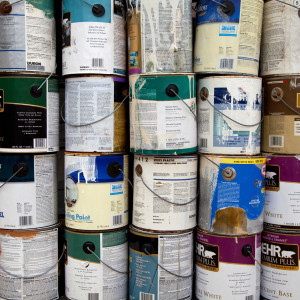 Hazardous Waste Disposal
Resources: Hazardous Waste Disposal
Hazardous Waste Disposal
Resources: Hazardous Waste DisposalHousehold Hazardous Waste (HHW) disposal services are available for residents of Franklin, Delaware & Union Counties. The easiest way to know if an item is considered hazardous is to look for keywords on the packaging that includes poison, danger, caution, flammable, corrosive, or use in a well-ventilated area. Here are links to where you can dispose of household hazardous waste in the community:
- Franklin County Residents - SWACO
- Delaware County Residents - DKMM
- Union County Residents - NCO Solid Waste District
 Hydrant Information
Resources: Hydrant Information
Hydrant Information
Resources: Hydrant InformationHydrant Maintenance
There are more than 3800 fire hydrants located throughout the City of Dublin. About 84 percent of these hydrants are publicly owned and maintained by the City of Dublin and Washington Township Fire Department. The remaining 14 percent are owned and maintained by companies, apartment complexes and neighborhoods serviced by private water lines.
Identifying Hydrants by Color
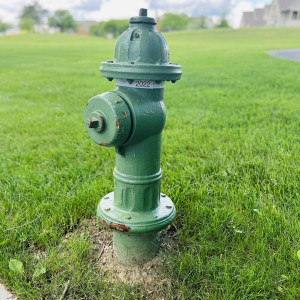
The easiest way to tell the difference between a private hydrant and public fire hydrant is by color. Public hydrants are painted completely green; private hydrants are white with green caps. Private fire hydrants are connected to a private water line, whereas public fire hydrants connect to a public water line.
Hydrant Permitting
Any individual, contractor, developer or business planning to install or use a fire hydrant must first obtain a permit. These permits ensure that the City of Dublin, Washington Township Fire Department and City of Columbus are aware of the location and authorized activity at hydrants. Current permitting procedures and fees can be obtained at the City of Dublin Service Complex, 6555 Shier Rings Road, or by calling the service mainline at 614.410.4750.
Public Hydrant Maintenance
Publicly owned hydrants are inspected and flushed at least every six months and painted every three to five years. Each fall, the hydrant barrels (the portion of the hydrant above ground) are drained to below the frost line to ensure they do not freeze during winter months.
Private Hydrant Maintenance
In the past, some private hydrants have been found frozen and/or inoperable. That is why it is important that owners take preventative measures to ensure that hydrants work well every time they are needed- especially in an emergency. Periodic flushing is necessary to maintain fire hydrants and to ensure they function properly. City ordinance requires that private hydrants be flushed at least once annually between April 15 and October 15. When flushing a hydrant, a backflow prevention device must be used to prevent fertilizers, waste and other contaminants from being drawn back into the water lines. For information regarding backflow prevention devices, please contact the Dublin Division of Street and Utilities at 614.410.4750.
Inoperable Hydrant
If you own a private hydrant and become aware of malfunctions, place an out-of-service bag over the barrel and contact a contractor for repairs. Additionally, please notify Washington Township Fire Department at 614.652.3920 with the exact location of the disabled hydrant.
Questions or Concerns?
Contact the City of Dublin Division of Street and Utilities Operations at 614.410.4750 or visit DublinOhioUSA.gov/, WTWP.com/ or columbus.gov/Services/Columbus-Water-Power/.
 Law Enforcement
Resources: Law Enforcement
Law Enforcement
Resources: Law EnforcementPolice services, including patrol and investigation, are provided by the Franklin County Sheriff’s Office in unincorporated areas, and by the City of Dublin Division of Police within the Dublin city limits.
The sheriff provides the following services: declaring snow emergencies, conducting real estate auctions, issuing warrants, serving court papers and maintaining the jail. The sheriff also maintains a registry of sex offenders on the county website.
How to Reach Law Enforcement
Emergency: Call 9-1-1
Franklin County Sheriff’s Office Patrol Bureau: (614) 525-3333, Franklin County Sheriff’s Office
City of Dublin: Police non-emergency number, (614) 889-1112
City of Columbus: Police services information, (614) 645-4760
Township Administration Office: (614) 652-3920
 Mosquito Control
Resources: Mosquito Control
Mosquito Control
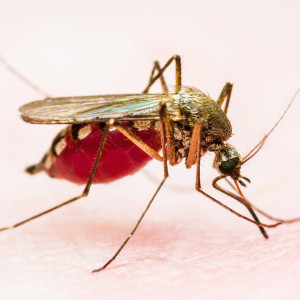
Resources: Mosquito ControlMosquitoes can pose a potential health risk as transmitters of diseases, such as encephalitis and West Nile virus. A single water-filled bucket can produce a new generation of hundreds of biting mosquitoes every few days. Most disease-causing mosquitoes spend their entire lives within 300 feet of their breeding site. Mosquitoes lay their eggs in water. Larvae hatch from the eggs and develop into flying adults. Anything in yards that hold water can be a breeding site for mosquitoes.
To reduce the mosquito population, eliminate the conditions mosquitoes need to breed:
- Empty, remove, cover or turn over any container that has the potential to hold water.
- Repair leaky pipes and outside faucets.
- Make sure gutters and downspouts are free of blockages and are properly draining.
- Empty wading pools weekly and store indoors when not in use.
- Properly dispose of old tires.
- Change water and scrub vases that hold flowers or cuttings twice each week.
- Empty bird baths twice weekly.
- Empty your pet’s watering dishes daily.
- Drain or fill low areas on your property that hold water for more than three days.
The Franklin County Board of Health installs and monitors mosquito traps throughout the Township from early summer to mid-fall for the incidence of West Nile virus and La Crosse encephalitis in the mosquito population. If surveillance shows an increasing number of diseased mosquitoes and an unusually large number of mosquitoes that test positive for West Nile virus in a trap, the area will be sprayed. Spraying is effective on only the adult mosquito population and does not kill egg or larval stages.
Mosquito Spraying
When done properly, spraying for mosquitoes is an effective way to reduce the numbers of mosquitoes and reduce residents’ risk of contracting mosquito-borne diseases. In order to be effective, spraying must coincide with the time of day the mosquitoes are most active. For the mosquitoes that carry West Nile virus, that means spraying around twilight and early evening or early morning hours.
Take the following precautionary steps to greatly reduce exposure during mosquito spraying:
- Whenever possible, remain indoors with windows closed.
- Bring laundry and toys indoors before spraying begins. Wash with soap and water if exposed to pesticides during spraying.
- Bring pets indoors, and turn off aerators in ornamental fishponds to avoid direct exposure.
- Cover outdoor tables and play equipment or rinse them off after spraying is finished.
- Wash exposed skin surfaces with soap and water if you come in contact with pesticides.
- Wash any exposed fruits and vegetables with water before storing, cooking or eating.
- Wait about one hour before allowing children to play in areas that have been sprayed.
- For your safety and the safety of our operators, please do not approach or follow a spray truck when it is operating. If you are in a vehicle, please try to find an alternate route.
 Prescription Drug Disposal
Resources: Prescription Drug Disposal
Prescription Drug Disposal
Resources: Prescription Drug DisposalThe City of Dublin has a 24/7 drop box located inside the Dublin Justice Center lobby, 6565 Commerce Parkway, near the Police Records window, to safety dispose of prescription drugs any time of year.
- At this time, the service accepts pills, patches, gel-caps, dry medications,
medication samples and pet medications. - The service does not accept liquids, sharp needles, syringes, inhalers, epinephrine
autoinjectors, vaping devices, lancets or aerosol containers. - Medical equipment is not accepted.
- It is preferred for loose medications to be sealed in a zip-close bag before being
placed in the drop box. - If you must keep medications in their prescription bottles, please cross out personal information or remove labels.
 Refuse & Recycling Collection
Resources: Refuse & Recycling Collection
Refuse & Recycling Collection
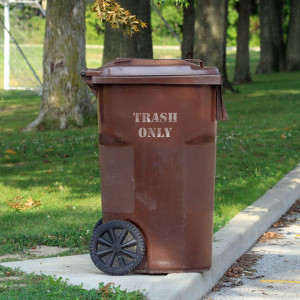
Resources: Refuse & Recycling CollectionWashington Township contracts with Rumpke of Ohio Inc. for waste disposal services for unincorporated residents. Benefits to residents who receive this service include free refuse, recycling and yard waste collection services. Rumpke disposes of residents’ municipal solid waste at the Franklin County landfill, which is operated by the Solid Waste Authority of Central Ohio. Recyclable items are processed at Rumpke’s materials recovery facility. To learn more about acceptable recycling items, please visit their website.
Guidelines for Waste Disposal in Unincorporated Township Residents
- Yard Waste Pick-up: Monday
- Trash & Recycling: Wednesday
- Rumple observes the following holidays: Memorial Day, Independence Day, Labor Day, Thanksgiving Day, Christmas Day, and New Year's Day (service will be delayed a day.
If you are a new resident in the unincorporated area, please call 1-800-828-8171 to set up the service.
 Safe Needle Disposal
Resources: Safe Needle Disposal
Safe Needle Disposal
Resources: Safe Needle DisposalIt is important to safely get rid of used needles and lancets (sharps) to protect yourself and others. Used needles can hurt people and spread diseases. Never throw a used needle or sharp into the trash.
To safely dispose of used needles/sharps:
Always Put Needles In A Safe Sharps Container
- Buy one at the pharmacy.
- Use a hard plastic bottle with a screw top such as a bleach or laundry detergent bottle
or a coffee can. *(Do not use a glass jar because it can break.) - Seal the cap tightly and use duct tape if necessary to keep the lid
from coming off. - Label the bottle “Danger. Needles Inside.”
- Place the bottle in a tied trash bag and put it in a trash can.
For more information on how to safely dispose of used needles and lancets, visit Rumpke.
 Snow Plowing & Ice Treatment
Resources: Snow Plowing & Ice Treatment
Snow Plowing & Ice Treatment
Resources: Snow Plowing & Ice TreatmentWashington Township provides snow removal, ditch maintenance, street sign maintenance and pavement maintenance for Township roads. Township roads include Baldwin Road, Fulk Road, Holiday Lane, Shier Lane, Fishel Drive and the alleys in the unincorporated town of Amlin.
Washington Township has contracted with The City of Dublin and Franklin County Engineer to plow snow and spread salt as needed. The City of Dublin will be covering the Amlin area (including alleys). Franklin County Engineer will be covering Shier Lane, Holiday Lane, Baldwin Road, and Fishel Drive. Plowing and ice control in these areas will take place after primary roads have been cleared.
If you wish to contact either of the above-mentioned agencies about your snow and ice control services, they can be reached at the following numbers:
City of Dublin, Streets & Utilities Division Superintendent – (614) 410-4750
Franklin County Engineer, Maintenance – (614) 525-3030
Washington Township works closely with the Franklin County engineer to tour and inspect roads and to identify and fulfill maintenance needs. By law, the county engineer serves as engineer for the townships. The county engineer bids for maintenance services, in line with county and other township projects under way in the county. Funds are provided through gasoline taxes and motor vehicle license fees to pay for the maintenance work and road signage.
Washington Township partners with other Townships, Franklin County and the Franklin Soil and Water Conservation District to meet the requirements of the National Pollutant Discharge Elimination System (NPDES) Phase II Storm Water Program.